
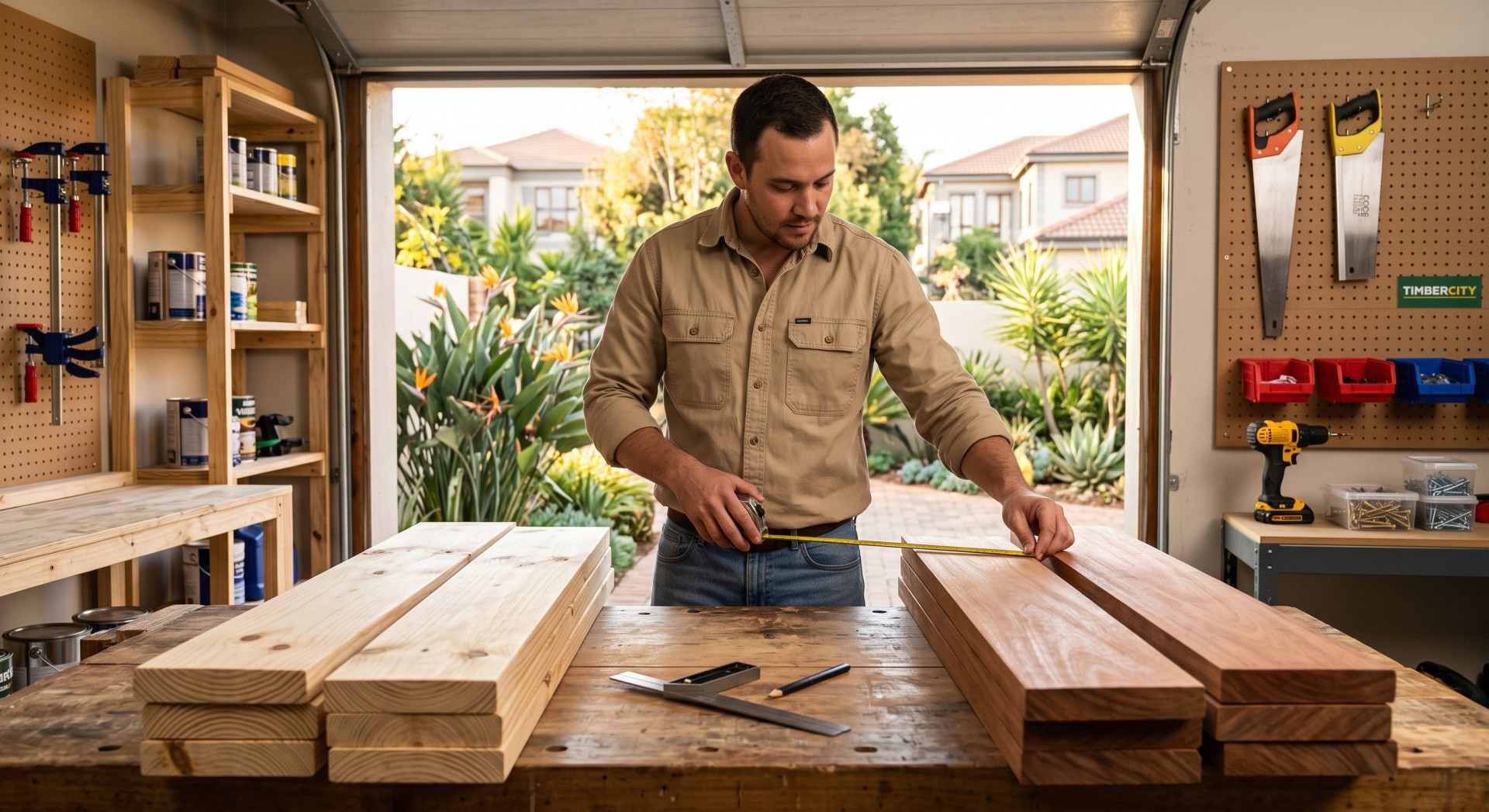
Good builders don’t choose timber because it looks nice. They choose it because it suits the job.
That’s why the pine-versus-meranti debate never really goes away.
They’re both excellent materials, but for completely different reasons. Understanding those differences can save money, improve the final finish, and stop you using premium hardwood where standard pine would’ve done the job just as well.
This guide breaks down what pine and meranti actually are, how they compare in the real world, and which one deserves a place in your next project. If you’re exploring different species, sizes, and finishes, browse Timbercity’s range of timber here.
What Is Pine? Understanding South African Pine
South African pine is one of the hardest-working materials in the building industry. It’s a fast-growing softwood that’s locally cultivated, making it readily available, affordable, and a practical choice for everything from structural framing to DIY furniture.
SA pine timber is typically pale yellow to light brown with a visible grain and natural knots that give it plenty of character. It’s also relatively lightweight, making it easier to transport, cut, drill, and assemble than most hardwoods.
One of pine’s biggest strengths is how well it accepts finishes. Whether you’re painting, staining, or applying protective treatments, pine absorbs coatings evenly, giving you plenty of flexibility depending on the project.
When treated correctly, particularly with CCA treatment for outdoor applications, pine becomes suitable for decking, pergolas, fencing, and other exterior structures where moisture and insects are a concern.
It’s also incredibly versatile. Whether you’re framing a wall, building workshop shelving, or tackling your first DIY furniture project, pine gives you an excellent balance of performance, affordability, and ease of use.
What Is Meranti? The Premium Hardwood Choice
Meranti sits at the opposite end of the spectrum.
Imported primarily from Southeast Asia, meranti is a hardwood valued for its stability, strength, and appearance. It’s instantly recognisable by its rich reddish-brown colouring, fine straight grain, and relatively knot-free finish.
Where pine often gets painted, meranti is usually chosen because you want to see it.
It handles daily wear exceptionally well and is naturally more resistant to movement caused by changes in temperature and humidity. That stability makes it a favourite for quality doors, window frames, skirting boards, and exposed joinery where precision matters long after installation.
Because it’s denser than pine, meranti also feels more substantial. It delivers a premium finish that suits projects where appearance is just as important as performance.
Pine vs Meranti: Which Comes Out on Top?
There’s no outright winner. The better timber is simply the one that suits the job.
Cost
Pine wins on affordability.
Because it’s grown and processed locally, SA pine timber costs significantly less than imported hardwoods. If you’re building structural framing, shelving, or painted furniture, there’s often little reason to spend more.
Meranti carries a higher price tag thanks to import costs, slower growth, and its premium appearance. If the timber is going to become a visible feature, that extra investment often pays for itself.
Ease of Working
Pine is forgiving.
It cuts easily, machines cleanly, and accepts screws and nails without much resistance. That’s one of the reasons it’s so popular with DIY enthusiasts and first-time furniture builders.
Meranti demands a little more respect. Its density means sharper blades, slower cuts, and pilot holes before driving screws. It takes a bit more effort, but the finish usually rewards the extra care.
Appearance
This is where meranti earns its reputation.
If you’re planning to apply a clear varnish or natural oil finish, meranti’s rich colour and consistent grain create a premium look that’s difficult to replicate.
Pine, meanwhile, shines when painted or stained. It offers enough natural character while remaining versatile enough to suit almost any colour palette.
When SA Pine Timber Makes More Sense
Pine is the practical choice whenever strength, value, and versatility matter more than showcasing the timber itself.
It’s commonly used for:
- Structural roof trusses
- Wall framing
- Shelving
- DIY furniture
- Cabinet carcasses
- Decks and pergolas using treated timber
If the timber will eventually disappear behind plasterboard, paint, or cabinetry, paying for premium hardwood usually doesn’t make financial sense.
For projects that need a smoother decorative finish from day one, PAR (Planed All Round) timber is worth considering. These boards have already been machined smooth on every face, making them ideal for shelving, furniture, joinery, and other visible applications. Explore Timbercity’s PAR timber range here.
When Meranti Timber Is Worth the Investment
Some projects deserve better-looking timber.
Meranti is an excellent choice when the wood becomes part of the finished design rather than something hidden behind another material.
It’s commonly used for:
- Front doors
- Window frames
- Premium cabinetry
- Stair components
- Decorative mouldings
- High-end furniture
- Exposed joinery
If you’re investing time into craftsmanship, it makes sense to choose a timber that shows it off.
Meranti’s natural colour and stability make it ideal for projects that will be varnished or oiled rather than painted. It costs more upfront, but it also delivers a finish that’s difficult to match with softer timbers.
The Right Timber Makes Every Build Better
Pine and meranti aren’t competitors as much as they are specialists.
Pine delivers exceptional value, easy workability, and reliable structural performance. Meranti offers premium aesthetics, outstanding durability, and the kind of finish that becomes part of the design itself.
The trick isn’t choosing the “better” timber. It’s choosing the right timber for the job.
Visit your nearest Timbercity branch to compare the different species in person, speak to experienced staff about your project, and find the timber that matches both your budget and your build. You can also read this article we wrote.
Frequently Asked Questions
-
What is the main difference in durability between pine vs meranti?
Meranti is naturally denser, harder, and more resistant to wear than untreated pine. Treated SA pine, however, performs exceptionally well in many structural and outdoor applications.
-
Is SA pine timber strong enough for outdoor building projects?
Yes. When CCA treated, SA pine timber is widely used for decks, pergolas, fencing, and other outdoor structures that need to withstand South African conditions.
-
What is meranti best used for in home renovations?
Meranti is commonly used for premium applications such as doors, window frames, skirting boards, cabinetry, furniture, and decorative joinery where appearance matters as much as durability.
-
Can you paint meranti timber, or is it only meant for varnish?
You can paint meranti, but many homeowners choose clear varnish or oil finishes to highlight its rich natural colour and attractive grain.
-
Why is South African pine so much cheaper than imported hardwoods?
South African pine is grown and processed locally, reducing transport and import costs. Meranti is imported, making it naturally more expensive due to shipping, sourcing, and availability.