
The best cabinetry rarely announces itself. It just works. The finish feels right, the surfaces hold up to daily life, and years later it still looks like it belongs. That’s why melamine has become one of the hardest working materials in modern cabinetry.
It offers durability without the maintenance, design flexibility without the premium price tag, and enough variety to suit everything from minimalist kitchens to hardworking utility rooms. For DIY builders, cabinet makers, and homeowners planning a renovation, it strikes a balance that’s hard to ignore.
The trick is knowing which board to choose. The core, the finish, the colour, and even the edging all shape how the finished project looks, performs, and lasts.
This guide unpacks what a melamine board is, the different types available, today’s leading colours and finishes, and how to choose the right combination for a result that looks considered from day one.
What Is a Melamine Board and Why Choose It?
A melamine board is an engineered timber panel, usually particleboard or MDF, finished with decorative paper that has been bonded to the surface under heat and pressure using melamine resin. The result is a tough, ready to use board that doesn’t need painting, staining, or varnishing.
That’s what makes melamine so practical. The surface handles everyday scratches, regular use, and most household wear with very little fuss. In kitchens, bedrooms, home offices, and built in storage, that kind of reliability goes a long way.
It also makes sense from a cost perspective. Solid timber has natural character, but it comes with a higher price tag and ongoing maintenance. A quality melamine board delivers a clean, consistent finish at a much more accessible price point, which is why it has become such a staple in modern cabinetry.
Just as important is the way it’s prepared. Even the best board won’t hide a poor cut. Precision cutting and properly matched edging are what take cabinetry from functional to professionally finished.
Exploring the Different Types of Melamine Boards
One melamine board doesn’t suit every build. The core matters just as much as the finish.
Particleboard core melamine is the most common option. It’s stable, cost effective, and well suited to standard built in cupboards, shelving, and general cabinetry. For most residential projects, it does the job well and keeps costs under control.
MDF core melamine offers a denser, smoother substrate. That makes it a stronger choice for projects that need cleaner routing, more detailed shaping, or a more refined finished edge.
Some projects also call for moisture resistant melamine boards. These are worth considering in bathrooms, laundry rooms, and sink bases where humidity and occasional water exposure are part of the environment.
You’ll also come across single sided and double sided boards. Double sided boards make more sense for cabinet doors, floating shelves, and open storage where both sides remain visible. Single sided boards are often used for hidden panels and structural components.
Trending Melamine Board Colours for Modern Homes
Colour changes how a room feels long before anyone notices the joinery.
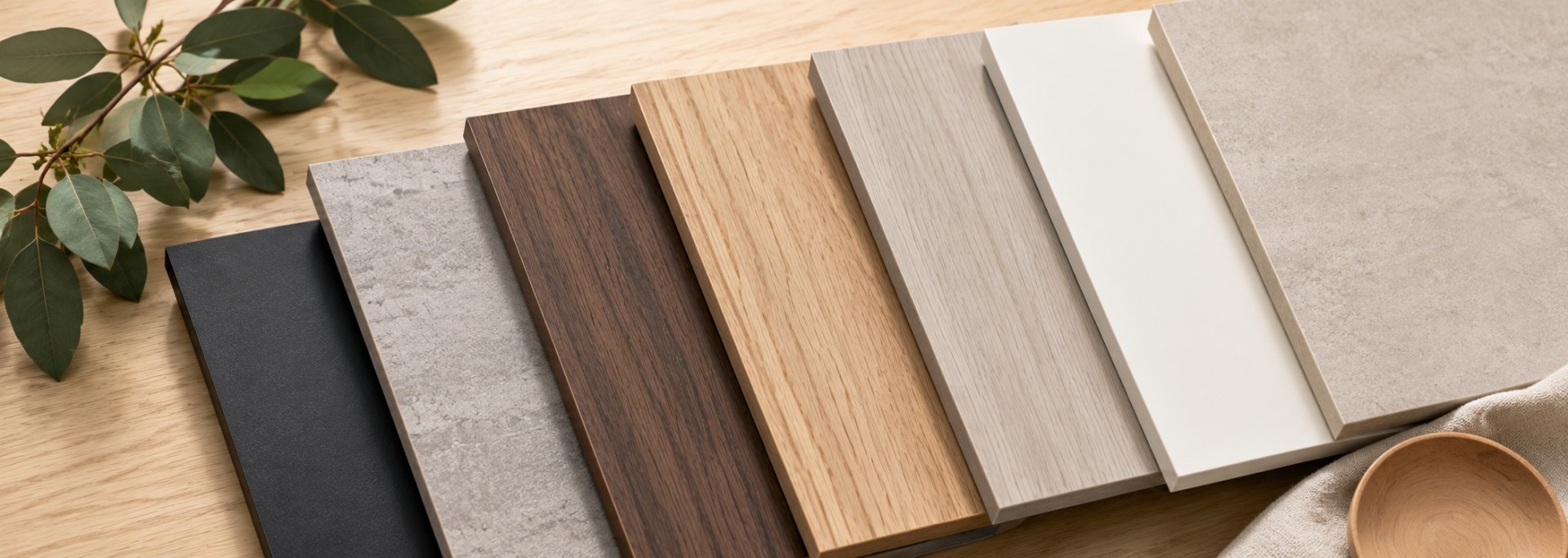
Classic neutrals still lead the pack. Crisp whites, soft greys, charcoal tones, and matte blacks all work well in kitchens, bedrooms, and workspaces where a clean, modern look matters. They’re easy to pair with other finishes and they rarely age badly.
Woodgrain melamine has also become far more convincing. Modern manufacturing techniques recreate the look of oak, walnut, ash, and other hardwoods with impressive realism. You get the warmth and texture of timber without the cost or upkeep of solid wood.
For homeowners wanting something with a little more personality, two tone cabinetry continues to gain ground. A neutral kitchen paired with a darker island, feature shelving, or coloured accent units introduces contrast without overwhelming the space.
The best colour isn’t always the boldest. It’s the one that still looks right after the trend has moved on.
Selecting the Perfect Melamine Board Finishes
Once the colour is right, the finish decides how it behaves in the room.
Matte finishes are a strong choice for busy homes. They soften reflections, hide fingerprints better than gloss, and create a clean, understated look that works in both contemporary and practical spaces.
High gloss melamine delivers a very different effect. It reflects light around the room, making smaller spaces feel brighter and more open. It’s ideal when the goal is a sleeker, more polished aesthetic.
Textured finishes bring another dimension altogether. Whether it’s a subtle woodgrain embossing, a stipple effect, or a peen style surface, texture adds depth and helps disguise minor scuffs and smudges. It also makes wood look boards feel more authentic.
The last detail is edging, and it’s one that too many projects treat as an afterthought. Matching ABS or PVC edge banding protects exposed edges and keeps the board looking continuous rather than cut and patched. A clean edge isn’t just a detail. It’s part of the design.
Build Better from the Board Up
The difference between standard cabinetry and something that feels properly built usually comes down to the decisions made before the first screw goes in.
Choose the right core for the job. Match the colour to the room, not just the trend. Pick a finish that suits how the space will actually be used. And never underestimate the value of clean cuts and proper edging.
That’s where melamine earns its reputation. It’s versatile, durable, and flexible enough to work across a wide range of projects without losing its edge.
If you’re planning a kitchen, bedroom, office, or storage upgrade, start with the board. Get that right, and the rest becomes a lot easier.
Frequently Asked Questions
-
Exactly what is a melamine board made of, and is it eco friendly?
A melamine board is made from an engineered timber core, usually particleboard or MDF, with a decorative melamine resin surface bonded on top. Its eco friendliness depends on how the core is sourced and manufactured.
-
What are the best melamine board finishes for high traffic kitchen cabinets?
Matte and lightly textured finishes are usually the best choice because they hide fingerprints, resist minor scuffs, and hold up well in busy kitchens.
-
Are there different types of melamine boards suitable for damp bathroom environments?
Yes. Moisture resistant melamine boards are designed for areas with higher humidity and occasional water exposure, making them more suitable for bathrooms and laundry rooms.
-
How do I accurately match melamine board colours with edge banding?
The safest approach is to use manufacturer matched edging in ABS or PVC that is designed to pair with the exact board colour and finish.
-
Can I paint over a melamine board if I want to update its colour later?
Yes, but the surface needs to be cleaned, lightly sanded, and primed with a bonding primer first so the paint can adhere properly.