
Budgeting for a project would be easy if timber came with one fixed price. It doesn’t.
The cost of a board depends on far more than its length. Species, structural grading, treatment, finish, availability, and even transport costs all play a part. Two boards that look almost identical can end up serving completely different purposes and carrying very different price tags.
That’s why comparing timber purely on cost rarely tells the full story.
This guide breaks down what drives timber prices in South Africa, explains the relationship between timber sizes and prices, and shows you how to compare options properly so you get the best value for your build. If you’re planning a project, it’s worth exploring Timbercity’s range of quality timber before you start pricing materials.
What Influences Timber Prices in South Africa?
There’s no single price for timber because there’s no single type of timber.
One of the biggest factors is where the wood comes from. Locally grown commercial pine is widely available, making it one of the most cost-effective options for construction, framing, shelving, and general DIY projects. Imported hardwoods, on the other hand, often carry a higher price because shipping costs, exchange rates, and international supply chains all influence what eventually lands in the timber yard.
The species itself also matters. Faster-growing timbers are generally more affordable, while slower-growing hardwoods require more time to mature, making them naturally more expensive.
Market conditions play their part too. Fuel prices affect transport, forestry operations fluctuate throughout the year, and demand from the construction industry can place additional pressure on supply. It’s why timber prices in South Africa don’t stay static for long.
Rather than chasing the cheapest board on the rack, it pays to understand what’s driving the cost in the first place.
Understanding the Link Between Timber Sizes and Prices
When it comes to timber, size matters.
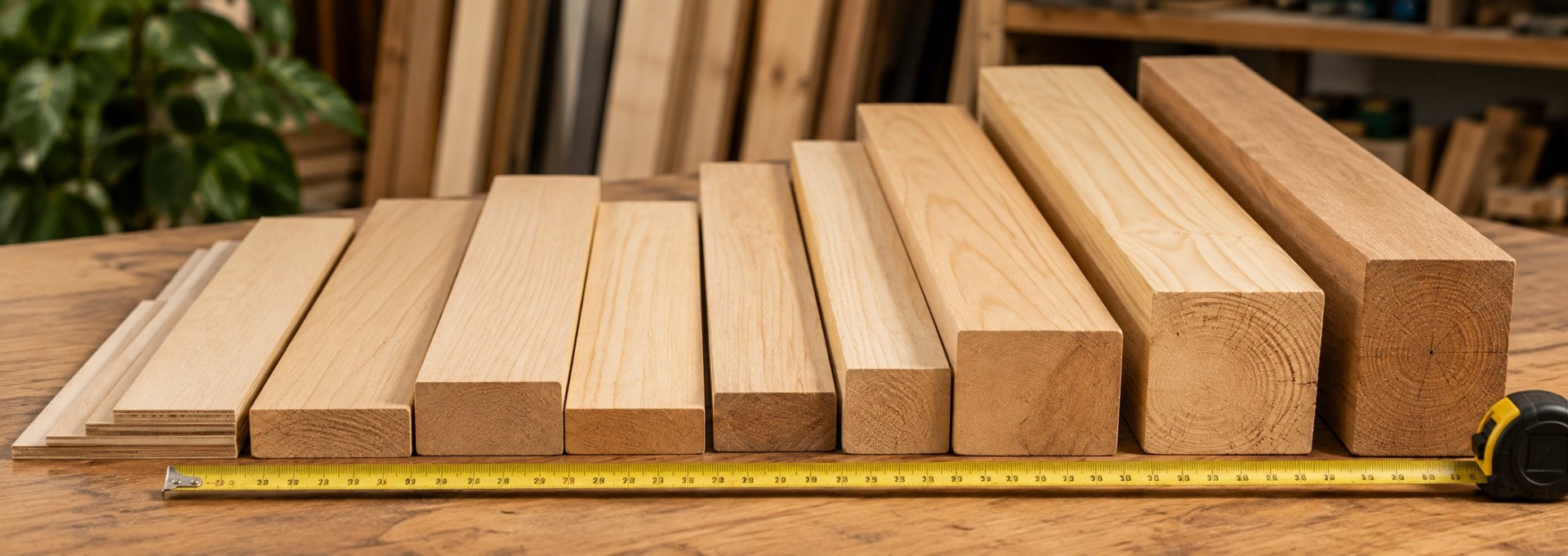
Larger sections require more raw material, longer growing cycles, and more intensive milling, so it’s only natural that bigger boards cost more than smaller profiles.
A light-duty batten used for trim work is a very different product to a heavy structural beam supporting part of a roof. Even if they’re made from the same species, the difference in size alone has a significant impact on price.
Length also plays a role.
Standard lengths are generally the most economical because they’re produced in high volumes. Designing your project around readily available sizes often works out far cheaper than requiring non-standard lengths or unnecessary cutting.
The table below provides an example of how different profiles are typically positioned.
| Timbercity Profile & Size | Finish / Material | Primary Project Use | Estimated Price Range (ZAR) |
| Swartland Pine PAR (12 × 94 mm) | Planed All Round | Light DIY crafts and lattice work | Client to insert |
| Swartland Pine PAR (22 × 22 mm) | Planed All Round | Cleats, framing and screen slats | Client to insert |
| Swartland Pine PAR (44 × 144 mm) | Planed All Round | Shelving and furniture | Client to insert |
| Swartland Hardwood PAR (22 × 22 mm) | Premium PAR | Fine trim and detail work | Client to insert |
| Swartland Hardwood PAR (22 × 44 mm) | Premium PAR | Furniture slats and balustrades | Client to insert |
| Swartland Hardwood PAR (22 × 222 mm) | Premium PAR | Cabinetry and tabletops | Client to insert |
If you’re looking for smooth, ready-to-use material, Timbercity’s range of PAR timber is a good example of timber that’s already been machined for cleaner, faster installation.
Structural vs Decorative Timber Prices
Not every board needs to look beautiful.
Structural timber is designed to do a job. It sits inside roof trusses, wall frames, or flooring systems where strength matters far more than appearance. Knots, colour variation, and surface imperfections are generally acceptable provided the timber meets the required structural grade.
Decorative timber is different.
This is the timber people actually see. Furniture, cabinetry, shelving, staircases, and exposed joinery all demand smoother finishes, cleaner grain, and greater visual consistency. Producing that quality requires more processing and stricter selection, which naturally increases the price.
That’s why buying premium decorative timber for hidden structural work rarely makes financial sense. Likewise, using rough structural timber where appearance matters usually creates more work later.
Matching the timber to the application is one of the easiest ways to manage your budget without compromising quality.
Treated vs Untreated: How Protection Affects Cost
Treatment adds to the upfront cost, but it usually saves money over the life of the project.
CCA-treated timber undergoes a preservation process that helps protect it against termites, fungal decay, and moisture damage. It’s the preferred choice for outdoor applications like pergolas, decks, fencing, and other structures exposed to the elements.
Untreated timber is generally more affordable and perfectly suited to indoor environments where it’s protected from weather and excessive moisture.
Trying to save money by using untreated timber outdoors often becomes an expensive lesson. Replacement costs, repairs, and labour quickly outweigh the initial saving.
Sometimes paying slightly more today is what prevents paying substantially more later.
How to Compare Timber Prices Properly
Price should always be part of the decision, but it shouldn’t be the only one.
When comparing timber, start by making sure you’re comparing like for like. Check that the species, dimensions, treatment, finish, and structural grading are equivalent before looking at the numbers.
Then consider everything else that affects the overall project.
Is the timber kiln dried? Has it been properly graded? Does it require additional machining before installation? Are cutting services available? How much transport will you need if you’re buying full-length boards?
These aren’t extras. They’re part of the total cost.
A slightly more expensive board that’s accurately machined, structurally graded, and ready to install can end up saving hours of labour and reducing material waste.
If you’re still deciding on the best timber for your project, Timbercity’s guide to building robust, long-lasting timber structures offers useful insight into choosing the right material for the job.
Buy for the Build, Not Just the Price
The cheapest timber isn’t always the best value.
The right timber balances cost, strength, durability, finish, and long-term performance. Once those pieces come together, you’re not just buying wood. You’re investing in a project that’s built to last.
If you’ve already got measurements or a cutting list, visit your nearest Timbercity branch. The team can help you interpret your plans, recommend the right timber for the application, and provide an accurate quote based on your project rather than a generic price list.
Frequently Asked Questions
-
Why do timber prices in South Africa fluctuate throughout the year?
Timber prices are influenced by factors such as local supply, international demand, transport costs, exchange rates, forestry production, and seasonal market conditions.
-
How do timber sizes and prices vary between standard structural pine and hardwoods?
Larger sections generally cost more than smaller profiles, while hardwoods typically command higher prices than structural pine because of their density, slower growth, and premium appearance.
-
What is the most accurate way to compare timber prices without sacrificing structural quality?
Compare the timber species, dimensions, structural grading, treatment, moisture content, and finish rather than looking at price alone.
-
Does CCA treatment significantly increase overall timber prices?
CCA treatment usually adds a modest upfront cost, but it helps protect timber against moisture, termites, and decay, making it a worthwhile investment for outdoor projects.
-
How can I calculate the exact volume of timber I need to avoid overpaying?
Prepare a detailed cutting list before purchasing. Planning your material requirements accurately helps minimise waste, reduces unnecessary offcuts, and makes it easier to compare quotes across suppliers.