
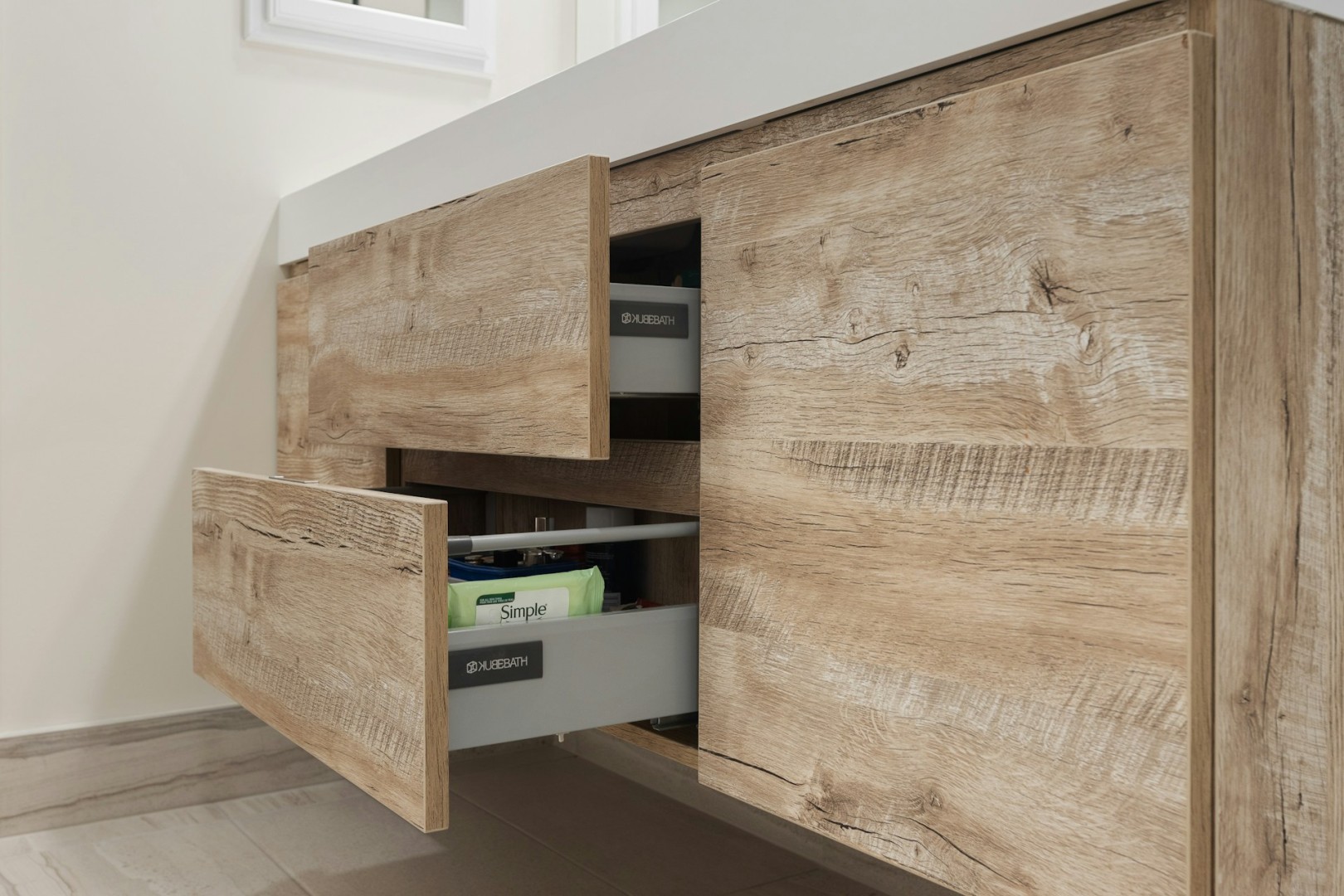
Every great kitchen starts long before the first cabinet is installed. It starts with a question that many people underestimate, what material to use?
It is easy to focus on finishes, colours, and layout, but what sits beneath the surface is what determines whether your cabinets hold strong for years or start to show wear far too soon. Doors that stay aligned, shelves that carry weight without sagging, panels that resist moisture and heat, all of it comes down to choosing the right board from the start. Melamine, MDF, and plywood are the most commonly used options for most kitchen builds, each with its own strengths, trade-offs, and ideal uses.
At Timbercity, your trusted project partner, we offer you access to a wide selection of quality boards that are built for durability, performance, and real everyday use in South African homes.
Key Factors to Consider When Choosing Cabinet Materials
Durability and Strength
Kitchen cabinets take daily strain. From heavy cookware to constant opening and closing, the material you choose needs to hold its shape and strength over time. Boards that resist bending, warping, and impact will always deliver a more reliable result.
Moisture and Heat Resistance
Kitchens are high moisture environments. Steam, spills, and temperature changes all play a role in how materials perform. Choosing boards that can handle these conditions is essential for long term durability.
Cost and Budget Considerations
Some materials are more affordable upfront, while others offer greater long-term value through durability. The right choice often comes down to balancing budget with how the kitchen will be used.
Ease of Installation and DIY Friendliness
For DIYers and carpenters alike, the way a material cuts, drills, and assembles matters. Boards that are easy to work with can save time and reduce errors during installation.
Melamine Board for Kitchen Cabinets – All You Need To Know
What Is Melamine Board?
Melamine board is an engineered panel made from particleboard or MDF, finished with a decorative resin surface. It comes pre finished, which means no painting or sealing is required.
Explore our range of melamine boards now, for modern cabinetry solutions.
Benefits of Using Melamine Board
Melamine offers a smooth, durable surface that stands up well to everyday use. It resists stains and scratches, making it ideal for busy kitchens. With a wide range of colours and textures available, it also allows for clean, contemporary designs without additional finishing work.
Potential Limitations
Edges need to be sealed properly to prevent damage, and care must be taken during cutting to avoid chipping. Precision is key when working with melamine.
Best Uses for Melamine Board
Melamine is ideal for cabinet carcasses, shelving, and internal panels where durability and a clean finish are essential.
MDF Board for Kitchen Cabinets – All You Need To Know
What Is MDF Board?
Medium Density Fibreboard or Supawood is made from compressed wood fibres bonded with resin. It is dense, smooth, and uniform, making it a favourite for detailed finishes.
Explore our range of MDF boards now, designed for precision and versatility.
Benefits of MDF Board
MDF provides a perfectly smooth surface, making it ideal for painted cabinets and decorative finishes. It has no grain or knots, which allows for consistent results across every panel.
Potential Limitations
It is less resistant to moisture than other materials and tends to be heavier, which can affect handling and installation.
Best Uses for MDF Board
MDF works best for cabinet doors, decorative panels, and painted finishes where a flawless surface is the priority.
Plywood Board for Kitchen Cabinets – All You Need To Know
What Is Plywood Board?
Plywood is made from thin layers of wood veneer bonded together in alternating directions. This cross-grain structure gives it strength and stability.
Explore our range of plywood boards now, for high performance cabinet builds.
Benefits of Plywood Board
Plywood offers excellent structural strength and is more resistant to moisture than many other boards. It is lightweight for its strength, making it easier to handle while still delivering durability.
Potential Limitations
It typically comes at a higher cost and often requires finishing to achieve the desired look.
Best Uses for Plywood Board
Plywood is ideal for cabinet carcasses, structural components, and areas exposed to moisture where strength and longevity are critical.
Melamine vs MDF vs Plywood Key Differences
| Material | Strength | Moisture Resistance | Cost | Best Use |
| Melamine | Moderate | Moderate | Affordable | Carcasses, shelving |
| MDF | Moderate | Lower | Affordable | Doors, painted panels |
| Plywood | High | High | Premium | Structural cabinets |
Each material brings something different to the table. The right choice depends on how your kitchen will be used and the finish you want to achieve.
Choosing the Right Board for Your Kitchen Cabinet Project
Melamine is ideal when you want a cost effective, clean finish for modern cabinetry. MDF is ideal for painted designs and decorative detail. Plywood is ideal when durability and moisture resistance are non-negotiables.
In many projects, the best solution is a combination. Plywood for structure, melamine for internal panels, and MDF for doors. This approach balances cost, performance, and aesthetics.
Tips for Building Long Lasting Kitchen Cabinets
Start with quality boards from a trusted supplier like Timbercity. Seal exposed edges carefully to protect against moisture. Use the right hardware and fittings to support long term use. Most importantly, ensure accurate cutting and assembly so every component fits as it should.
Well-built cabinets are not just about materials. They are about precision, planning, and execution working together.
Choose the Right Cabinet Board for a Durable Kitchen
The difference between a kitchen that lasts and one that struggles over time often comes down to material choice. Melamine offers convenience and affordability. MDF delivers a smooth, paint ready finish. Plywood provides strength and resilience where it matters most.
When you partner with Timbercity, you’ll have access to a wide selection of products, expert advice, and the materials you need to build with confidence. Choose wisely, build carefully, and create a kitchen that performs as well as it looks.
Timbercity – your project partner.
FAQs
What is the best material for kitchen cabinets?
The best material depends on your needs. Plywood offers the highest durability, melamine provides a cost effective and clean finish, and MDF is ideal for painted designs.
Is melamine board good for kitchen cabinets?
Yes. Melamine is a popular choice for cabinet interiors and carcasses due to its durability, smooth finish, and resistance to stains.
What is the difference between MDF board and plywood board?
MDF is smooth and ideal for painted finishes, while plywood is stronger, more moisture resistant, and better suited for structural components.
Which board lasts longer for kitchen cabinets?
Plywood generally lasts the longest due to its strength and moisture resistance, especially in high use kitchen environments.