
Whether you’re framing a roof, building a deck, or building a piece of furniture that’s meant to last, every project starts with the same decision: choosing the right timber.
It sounds straightforward, until you’re standing in front of a stack of boards trying to work out which size, grade, treatment, or species you actually need. That’s where things can get expensive. Buy the wrong timber and you could end up fighting warped boards, unnecessary waste, or material that simply isn’t designed for the job.
The good news? It doesn’t have to be complicated.
This guide breaks down the different types of timber, explapins how to read timber specifications, and makes sense of standard timber sizes in South Africa, so you can buy with confidence instead of guesswork. If you’re planning your next project, start by exploring Timbercity’s range of quality timber to see what’s available.
Decoding the Different Types of Timber
Walk into any timber yard and you’ll quickly realise there’s no such thing as a one-size-fits-all board. Every piece has a job to do, and choosing the right one makes the rest of the build a whole lot easier.
The first distinction is between softwood and hardwood.
Softwoods, like structural pine, grow relatively quickly and are commonly used for framing, roof structures, shelving, and general construction. They’re affordable, easy to work with, and available in a wide range of structural sizes.
Hardwoods, on the other hand, are typically denser and chosen where appearance matters just as much as strength. Species like meranti or oak are often used for furniture, joinery, doors, and premium finish work.
Then there’s the question of treatment.
Timber that’s destined for outdoor use should generally be CCA treated, which protects it against moisture, termites, and fungal decay. Indoor projects usually don’t require that level of protection, making untreated timber a practical option where it’s protected from the elements.
If you’re after timber that’s already planed, smooth, and ready to work with, Timbercity’s range of PAR timber offers an excellent starting point for furniture, shelving, and interior joinery.
Understanding Standard Timber Sizes in South Africa
One of the biggest misconceptions among first-time DIYers is assuming the size printed on a board is exactly what they’ll measure with a tape.
It usually isn’t.
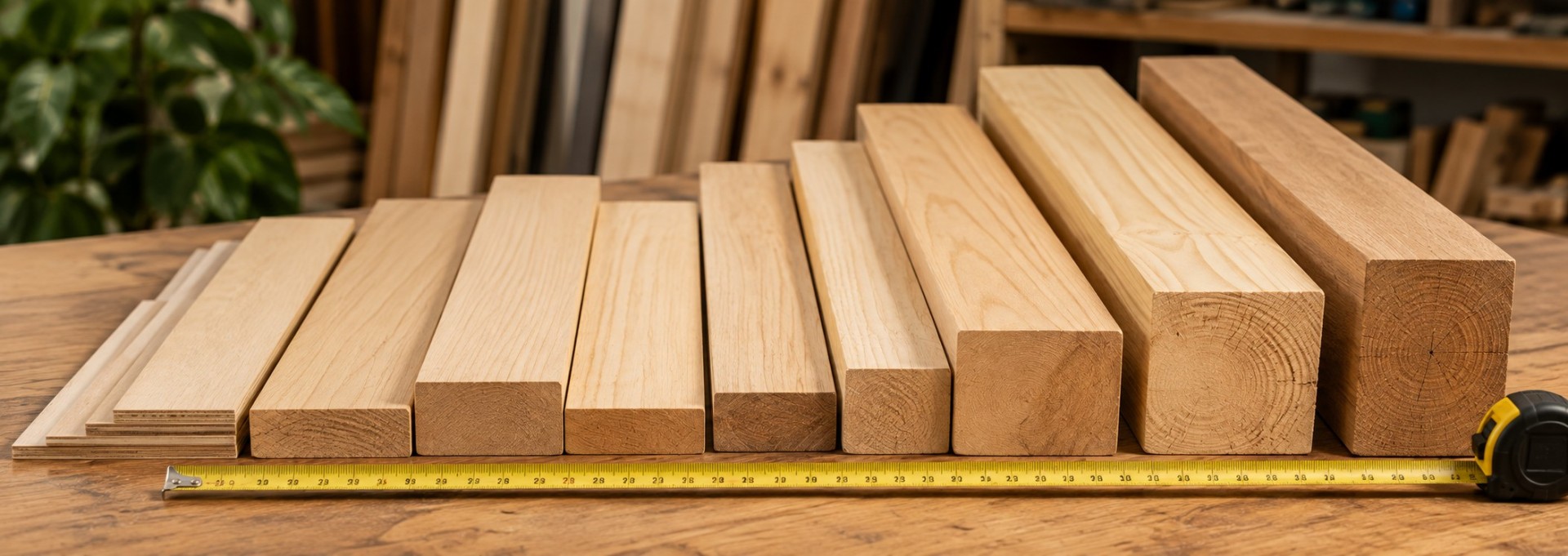
The size listed is known as the nominal size. After the timber has been machined and planed, the actual finished dimensions are often a few millimetres smaller. That’s perfectly normal and something builders account for during planning.
Timber is also supplied in a range of standard lengths, typically from around 1.8 metres up to 6.6 metres, with incremental increases that allow builders to minimise joins across larger projects.
Knowing these standard lengths before you buy helps reduce waste and makes planning your cutting list much easier. Rather than forcing your design around whatever happens to be available, it’s worth thinking through your cuts before you load the bakkie.
How to Read Timber Specifications
A stamp on a piece of timber tells you far more than where it came from.
Structural timber carries grading marks that indicate how much load it can safely support. In South Africa, you’ll commonly come across SABS or SATAS certified timber, along with structural grades such as S5.
That grading isn’t about appearance. It’s about performance.
It tells builders that the timber has been assessed for strength, stiffness, and acceptable natural characteristics like knots. That’s why structural pine for roof trusses often looks different from timber selected for furniture.
Moisture content is another specification worth paying attention to.
Kiln-dried timber has had much of its moisture removed before sale, reducing the chances of movement after installation. Timber that’s still carrying excess moisture can shrink, twist, or bow as it dries, creating problems long after the project appears finished.
For visible joinery, appearance grading often becomes more important. Fewer knots, straighter grain, and cleaner faces create a better finished product, even if the timber isn’t intended to carry heavy structural loads.
Choosing the Right Timber Sizes for Your Project
The right dimensions depend entirely on what you’re building.
Large structural applications like roof framing and wall construction typically require thicker sections designed to carry significant loads over long spans.
Furniture, cabinetry, and shelving are different. Here, you’re often balancing strength with aesthetics, selecting profiles that deliver enough support without looking bulky or oversized.
One of the easiest ways to improve any project is planning your cuts before buying material. A well-thought-out cutting list helps you get the most from every board, reduces offcuts, and often saves money in the process.
If you’re unsure how to optimise your layout, Timbercity’s guide on building durable timber structures offers practical advice on selecting timber for different applications.
What Is Timber Used For?
Timber remains one of the most versatile building materials available because it performs across both structural and decorative applications.
In construction, it’s used for roof trusses, wall framing, flooring systems, pergolas, decks, and outdoor structures.
Inside the home, it becomes cabinetry, shelving, staircases, doors, furniture, feature walls, and custom joinery.
The same material can frame an entire house or become the dining table at its centre. The difference comes down to choosing the right species, treatment, grade, and size for the job.
That’s why understanding timber specifications isn’t just for professionals. It’s what helps every DIY project come together properly from the very beginning.
Buy Once. Build Properly.
Good projects don’t happen because the timber looked right in the rack.
They happen because the right timber was chosen before the first cut was ever made.
Once you understand standard timber sizes, timber prices, structural grading, moisture content, and treatment options, you’re no longer buying boards. You’re choosing materials that are designed to perform exactly where they’ll be used.
If you’ve got measurements, a cutting list, or even just an idea sketched on paper, visit your nearest Timbercity branch. The team can help you choose the right timber, explain the specifications, and make sure you leave with material that’s ready to build with.
Frequently Asked Questions
What is the difference between nominal and actual timber sizes in South Africa?
Nominal size refers to the advertised dimensions, while actual size is the finished measurement after the timber has been planed. The actual dimensions are usually slightly smaller.
How do I read structural timber specifications like S5 grading?
S5 indicates that the timber has been structurally graded for load-bearing applications. It confirms the timber meets specific strength and quality standards.
What are the most common types of timber used for outdoor decking?
CCA-treated pine is one of the most common choices because it’s designed to resist moisture, insects, and fungal decay in outdoor environments.
What is timber used for when building an interior stud wall?
Timber forms the structural framework that supports plasterboard, insulation, doors, and fixtures within the wall.
Why is it important to choose CCA-treated timber for outdoor projects?
CCA treatment helps protect timber from rot, termites, and weather exposure, significantly extending its lifespan in outdoor conditions.