
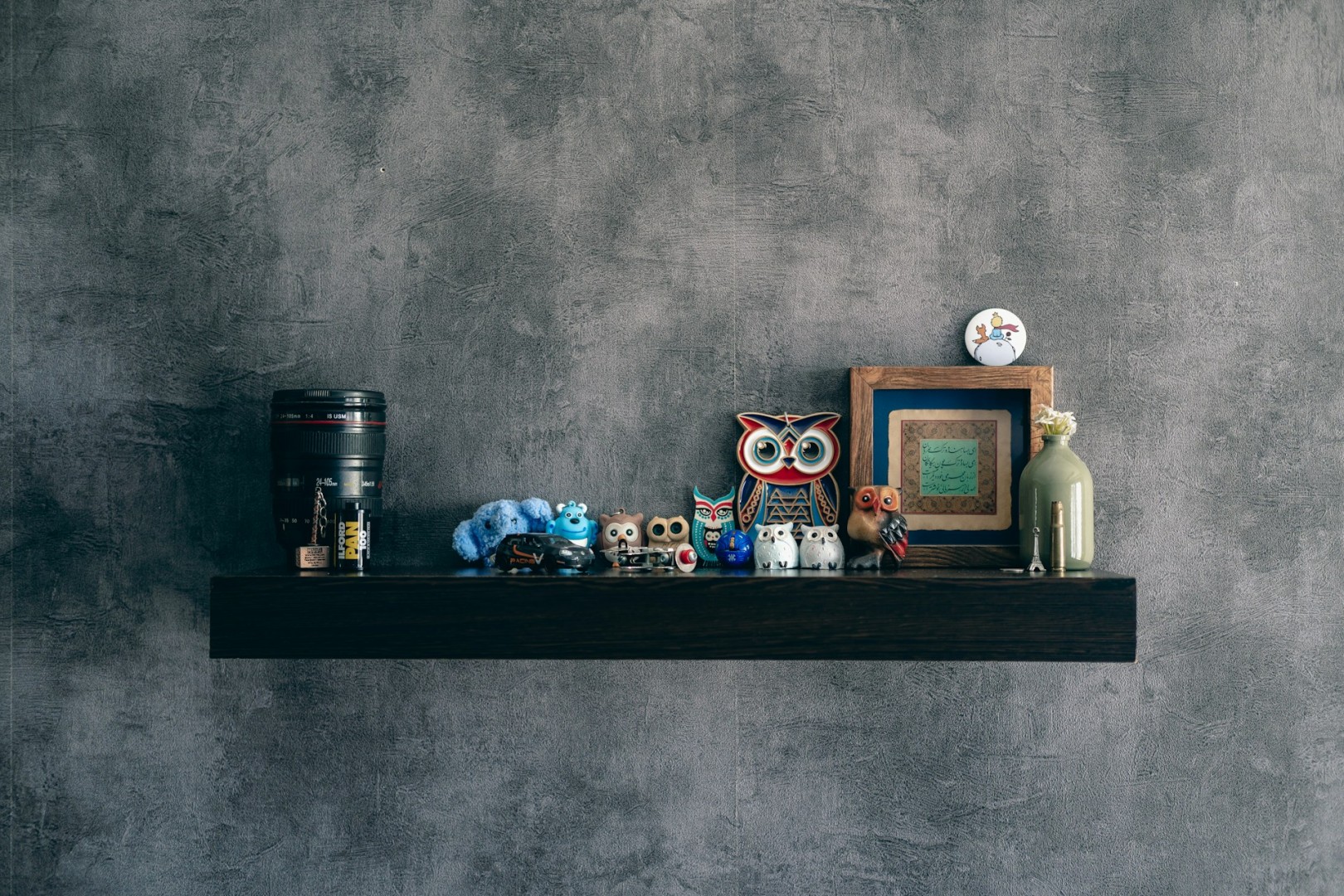
Floating shelves look simple. Clean lines, no visible brackets, nothing interrupting the wall. But behind that simplicity is precision – the kind that only works when the timber, support system, and measurements all line up properly.
Done right, floating shelves feel built-in, intentional, and architectural. Done wrong, they sag, tilt, or fail under weight.
This guide breaks down how to build floating shelves that are not just good-looking, but properly engineered for everyday use.
Choosing Your Timber: Solid vs Hollow Core
Every floating shelf starts with one decision: what you’re building it from.
The hollow box method is the most common DIY approach. It uses MDF or plywood to create a lightweight sleeve that slides over an internal support frame. It’s cost-effective, easy to customise, and works well for decorative shelving or light storage.
The solid timber method is more robust. Thick boards are drilled and mounted onto concealed steel rods or heavy-duty brackets. It’s the better choice for kitchens, workshops, or anywhere shelves need to carry real weight.
For most builds, the timber itself is what carries the design. A clean, well-finished board sets the tone for the entire installation. You can explore a full range of structural and decorative timber options here: Timber Range
Solid pine is often the go-to for DIY builds thanks to its strength and workability, while hardwoods offer a more refined, premium finish for high-visibility spaces.
The Backbone: Selecting Your Support System
What makes a floating shelf “float” is what you don’t see.
The support system is doing all the heavy lifting – whether that’s a concealed metal bracket anchored deep into the wall or a custom-built timber cleat system that forms the internal frame.
Metal brackets are ideal for speed and precision. They’re engineered to carry weight and keep the shelf perfectly level without visible supports. Timber cleats, on the other hand, give you more flexibility on custom builds and uneven wall conditions.
Either way, strength depends on preparation. The better the support system is installed, the cleaner the final finish will be.
Step-by-Step: Assembling DIY Floating Shelves
Start with accurate measurement and marking. Use a level and map your spacing before anything touches the wall. This is where most mistakes happen – not in building, but in alignment.
Next, prepare your timber. Getting boards cut to exact dimensions saves time and reduces error later. Services like the cutting list generator help streamline this process so your materials arrive ready for assembly: Cutting List Generator
Once cut, sand and finish your boards before installation. It’s far easier to achieve a clean result on a workbench than once the shelf is on the wall.
Mount your support system securely into brick or studs using appropriate fixings. This step determines load capacity, so it’s worth taking time to get it right.
Finally, slide the shelf onto the support and secure it discreetly from underneath. The goal is a clean exterior with no visible fixings and a flush, level finish.
Maximising Alcoves: Floating Built-In Shelves
Alcoves are one of the most underused opportunities in home design.
Because they already have three fixed sides, they naturally support floating shelf systems more efficiently than open walls. With properly fixed battens on each side, you can create seamless built-in storage that looks custom-designed rather than added later.
This approach works especially well in living rooms, bedrooms, and kitchens where symmetry and clean lines matter.
The Finishing Detail: Why Edging Matters
A floating shelf is only as good as its finish.
Raw edges, exposed fibre, or uneven sealing immediately reduce the quality of the final result – no matter how precise the installation is.
Professional edging transforms a cut board into a finished product. It protects the material from moisture, improves durability, and gives the shelf a clean, architectural edge that feels built-in rather than DIY.
If you’re refining your build for a more professional finish, edging services make a noticeable difference in both appearance and longevity: Edging Services
Floating shelves are one of the simplest ways to upgrade a space visually, but they rely on precision at every step – from timber selection to cutting accuracy to finishing detail.
When the structure is right and the finish is clean, they stop looking like a DIY project and start looking like part of the architecture.
Measure properly, cut accurately, and build with materials that are made to carry the load.
Frequently Asked Questions
How much weight can DIY floating shelves hold?
It depends on the support system and wall type, but properly installed concealed brackets in brick can hold significant weight when fixed correctly.
Do I need special tools for concealed brackets?
Yes – a drill, level, and appropriate masonry or stud fixings are essential for a secure installation.
Can floating shelves be installed on drywall?
Yes, but they must be anchored into studs or reinforced with suitable wall fixings designed for hollow walls.
What’s the best way to finish raw edges?
Professional edging is the most durable and visually consistent method, especially for melamine or engineered boards.