
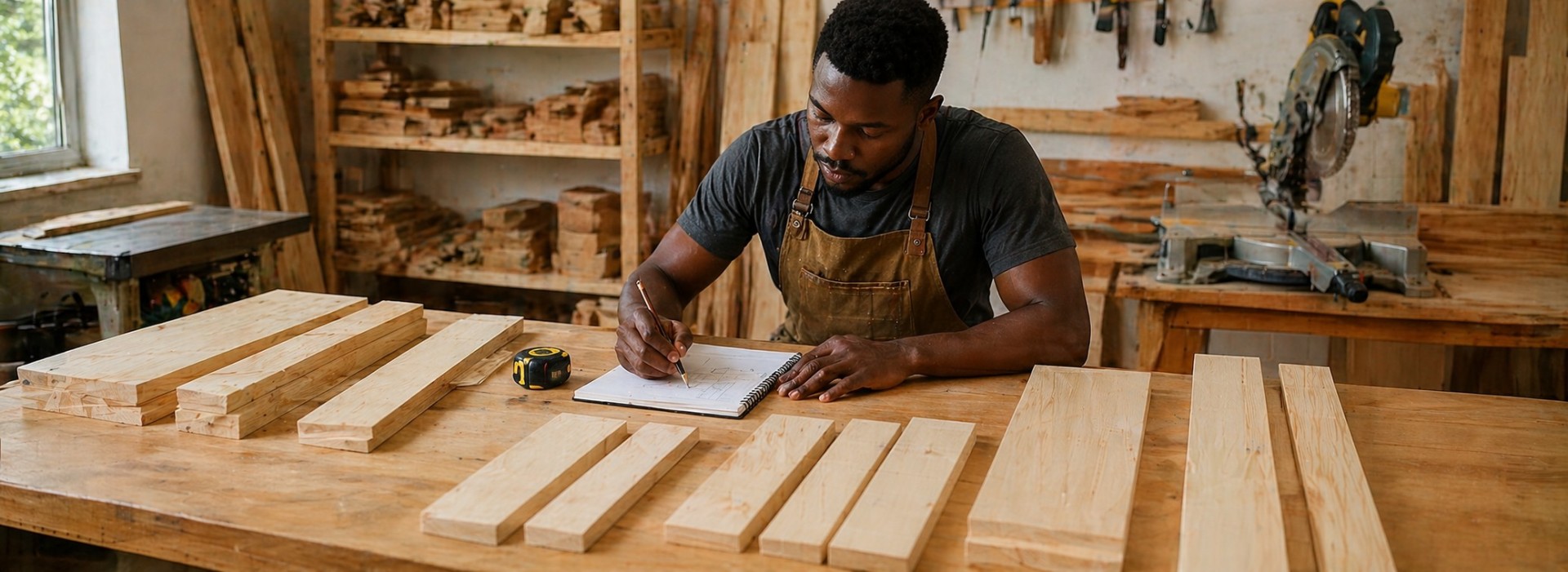
Most DIY projects don’t fall apart because people can’t build.
They fall apart because they start too soon.
A rough idea turns into a quick trip to buy timber. That turns into cutting on the fly. And before long, the project starts using more material, more time, and more patience than expected.
That’s usually where a cutting list changes everything.
It’s one of the simplest planning tools in woodworking, but also one of the most powerful. It takes a loose idea and turns it into a clear breakdown of exactly what needs to be cut, ordered, and assembled. If you know how to use it properly, it can save material, cut down mistakes, and make the build feel far more controlled from the start.
Timbercity supports this kind of planning with quality timber and boards, along with custom cutting services that help turn a cutting list into accurately prepared materials ready for assembly.
This guide breaks down what a cutting list is, what it includes, how to make one, and how it improves every stage of a project.
What Is a Cutting List
A cutting list is exactly what it sounds like, but it’s more useful than most people expect.
It’s a detailed breakdown of every individual piece needed for a project before anything gets cut.
Each line represents a part of the final build, with its exact size, quantity, and material type.
It’s used before buying materials and before any cutting begins. Not during the build.
The real value comes from seeing the full project in pieces before it exists physically. It forces clarity early, when changes are still easy.
A proper cutting list helps:
- Prevent over ordering or under ordering materials
- Flag design or measurement issues early
- Save time during assembly because everything’s already defined
- Improve accuracy by removing guesswork on site
It’s used by both professionals and DIY builders because it removes uncertainty before the first cut is made.
If you want to make this step easier, Timbercity has a cutting list generator that helps turn project ideas into structured material breakdowns.
What Does a Cutting List Include
A cutting list isn’t complicated, but it does need to be accurate.
Each entry should clearly define what’s being cut and how it fits into the build.
A typical cutting list includes:
- Part name or description
- Length, width, and thickness
- Quantity required
- Material type
- Notes on finish or grain direction
Here’s a simple example for a basic cabinet build.
Side Panel
- Length: 800mm
- Width: 400mm
- Thickness: 18mm
- Quantity: 2
- Material: Melamine Board
Top Panel
- Length: 600mm
- Width: 400mm
- Thickness: 18mm
- Quantity: 1
- Material: Melamine Board
Back Panel
- Length: 800mm
- Width: 600mm
- Thickness: 9mm
- Quantity: 1
- Material: Plywood Board
Shelf
- Length: 560mm
- Width: 380mm
- Thickness: 18mm
- Quantity: 2
- Material: MDF Board
Door
- Length: 780mm
- Width: 295mm
- Thickness: 18mm
- Quantity: 2
- Material: Melamine Board
Each line connects directly to a physical part of the build, which is what makes the list so powerful.
To get a better sense of materials used in real projects, you can explore Timbercity’s timber range here.
And board options here.
How to Make a Cutting List
A cutting list always starts before any tools come out.
Not with cutting, but with thinking the project through properly.
Start with a simple sketch of the finished idea. It doesn’t need to be perfect. It just needs to show structure and scale.
Then move from the whole to the parts.
Break the project down into individual pieces before thinking about materials.
Once that’s done, measure each piece properly and record:
- Length
- Width
- Thickness
- Quantity
- Material type
Then go back through everything and check it again. Most mistakes happen here when assumptions creep in.
Once everything is confirmed, the cutting list can be used to calculate how much material you need and shared with a supplier for accurate preparation.
How a Cutlist Optimiser Helps Plan Projects Better
Once you’ve got a cutting list, the next step is efficiency.
That’s where a cutlist optimiser comes in.
It takes all your pieces and arranges them across standard board sizes in the most efficient way possible.
Instead of guessing how many boards you need, it calculates it for you based on layout and material use.
The benefits are simple:
- Less material waste
- More accurate ordering
- Lower overall cost
- Faster, more organised cutting
It also helps you see how offcuts will be generated before you even start, which makes planning a lot more realistic.
How Cutting Lists Help Different Types of Projects
Cutting lists aren’t just for big builds. They help almost anything that involves multiple parts.
- Kitchen cabinet projects benefit because there are lots of components that need exact sizing.
- Shelving and storage projects become easier because everything is planned instead of adjusted mid build.
- Furniture builds become more manageable because each part is clearly defined.
- Outdoor projects benefit because material type and treatment can be planned upfront.
- DIY storage projects also work better because repeated parts can be grouped and optimised.
Quick Comparison
Kitchen Cabinets
- Why it helps: Multiple precise components
- Key benefit: Reduces errors and wasted material
Shelving Units
- Why it helps: Multiple shelf and panel sizes
- Key benefit: Accurate ordering and clean assembly
Furniture Builds
- Why it helps: Complex structure with different parts
- Key benefit: Simplifies execution
Outdoor Structures
- Why it helps: Material choice matters
- Key benefit: Better durability planning
DIY Storage Projects
- Why it helps: Repeated pieces
- Key benefit: Less waste and faster cutting
Common Mistakes to Avoid When Making a Cutting List
Most cutting list mistakes are small, but they cause big problems later.
- Not accounting for saw blade thickness can throw off measurements across the whole project.
- Forgetting to include all components leads to last-minute material runs.
- Using estimates instead of exact measurements creates inconsistencies during assembly.
- Not specifying material types properly can result in using the wrong board in the wrong place.
- Skipping a final check against the sketch is one of the easiest ways to introduce errors.
Avoiding these issues leads to:
- More accurate ordering
- Fewer build problems
- Less waste
- A smoother workflow
How Timbercity Supports Better Project Planning
A cutting list only works well if it’s translated properly into materials.
That’s where Timbercity comes in.
In store cutting services use your cutting list to prepare timber and boards to exact dimensions, so you don’t have to adjust things on site.
You can also bring your list in and get help working out how much material you actually need, which helps avoid over ordering or shortages.
With a wide range of timber and board products, most cutting lists can be supported from a single place.
If you want to simplify planning even further, Timbercity’s team can also review your cutting list and help refine it before anything gets cut.
Why Source Timber and Boards from Timbercity
Timbercity has over 50 years of experience supporting DIY builders and contractors across South Africa.
The range includes timber and boards for everything from small home projects to full-scale builds.
Custom cutting, edging, and drilling services are available in-store, which helps turn a cutting list into ready to assemble parts.
Expert staff can also guide material selection so you start with the right products from the beginning.
With consistent stock and nationwide access, it’s easier to plan projects without running into supply issues.
Plan Better, Build Better with a Cutting List
A cutting list might seem simple, but it changes how a project comes together.
It turns a rough idea into a clear breakdown of exactly what needs to happen before the first cut is made.
Used properly, it reduces waste, saves money, and improves the quality of the final build.
The key is planning before cutting.
Visit Timbercity in-store or online to access timber, boards, cutting services, and expert guidance to help plan your next project properly from the start.
Frequently Asked Questions
What is a cutting list in woodworking?
It’s a breakdown of every material piece needed for a project, including size, quantity, and material type.
How do I make a cutting list for a woodworking project?
Start with a sketch, break the project into parts, measure each piece, and record all dimensions clearly.
What is a cut list optimiser and how does it work?
It arranges your cutting list onto standard boards in the most efficient way to reduce waste.
Why is a cutting list important for DIY projects?
It improves accuracy, reduces waste, and helps plan materials before cutting begins.
Can Timbercity cut timber and boards to my cutting list dimensions?
Yes, Timbercity can cut materials to your exact cutting list in store.