
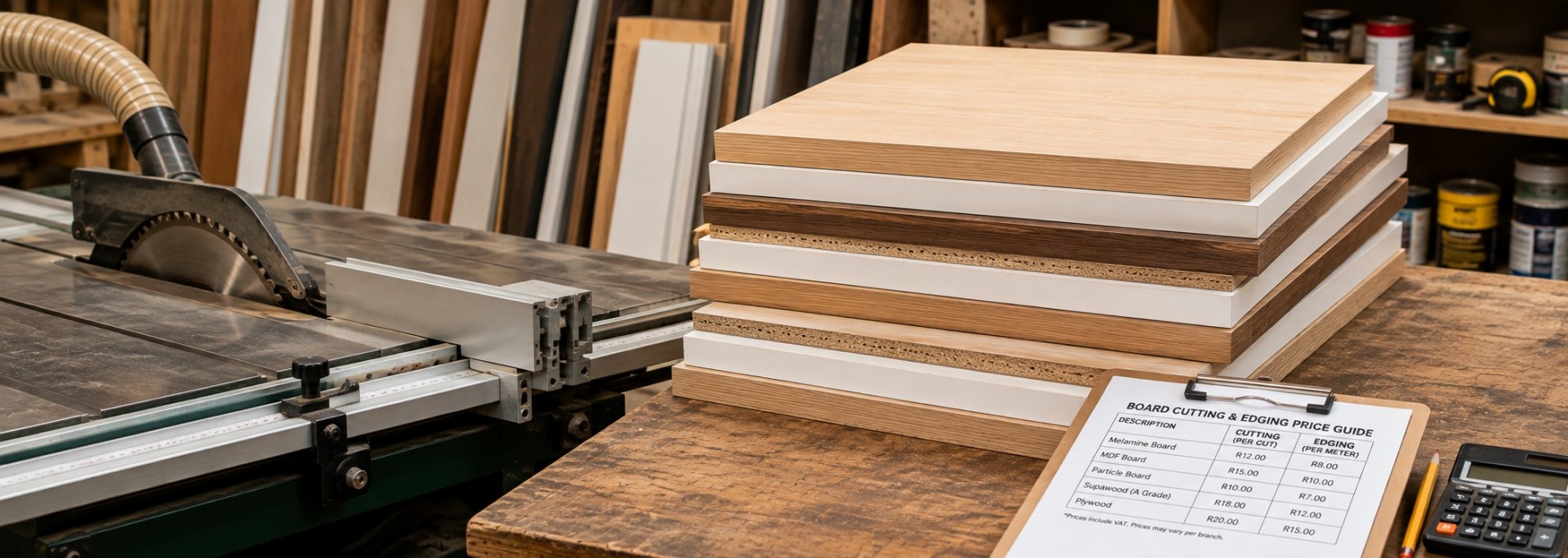
There’s an old saying in woodworking: measure twice, cut once.
In reality, most DIY budgets don’t unravel because someone measured incorrectly. They unravel because nobody budgeted for everything that happens after buying the boards.
A sheet of melamine isn’t a cupboard. It’s the starting point. It still needs to be cut accurately, edged neatly and prepared properly before it becomes something worth installing.
That’s why understanding board cutting and edging costs upfront matters. When you know how professional board cutting and edging are priced, it’s easier to plan your project, avoid expensive mistakes and get a much better idea of what your finished build will actually cost.
Here’s what goes into the numbers, and why professional preparation often ends up being the cheaper option.
Cutting Board Prices Aren’t Just About the Saw
It’s easy to think you’re paying someone to make a few cuts.
You’re not.
You’re paying for every board to come off the saw exactly where it should. Square corners. Straight edges. Panels that actually fit together when you start assembling cupboards instead of leaving you wondering where those missing three millimetres went.
Professional board cutting is generally priced per cut, but that’s only part of the story.
The Software Does More Work Than You Think
Long before a blade touches your board, specialised optimisation software gets to work.
Your cutting list is mapped across each sheet digitally to squeeze the maximum number of usable pieces from every panel.
That means fewer wasted off-cuts, fewer unnecessary sheets and a project that’s often cheaper than if you’d tried planning the layout yourself.
It’s one of those behind-the-scenes details you don’t notice until you realise you’ve bought one less sheet than expected.
Find out more about Timbercity’s Board Cutting Service.
Edging: The Small Detail That Changes Everything
- Freshly cut melamine can look deceptively finished.
- Until you see the exposed chipboard edge.
- Besides looking unfinished, those raw edges are vulnerable to knocks, moisture and everyday wear.
- That’s where edging comes in.
- Unlike cutting, edging prices are calculated per linear metre. In simple terms, the longer the exposed edges, the more edging material is required.
- The edging itself isn’t one-size-fits-all either.
- If you’re putting together garage shelving, standard 0.4mm edging may be all you need.
- Kitchen cupboards, office desks and furniture that gets used every day usually deserve something tougher.
- That’s where 1mm and 2mm PVC impact edging earns its keep. It costs a little more, but it also stands up far better to bumps, scrapes and years of opening, closing and general family life.
- Sometimes spending a little more upfront saves replacing a cupboard door later.
Cheap DIY Mistakes Have a Way of Becoming Expensive
Most DIY disasters don’t happen because the project was too ambitious.
They happen because one cut wandered off the pencil line.
One chipped corner meant buying another board.
One cupboard ended up 5mm out of square.
Those mistakes cost far more than professional cutting ever would.
Professional board cutting and edging removes much of that risk. Every panel is prepared accurately, every exposed edge can be professionally finished, and every component arrives ready for the part you were actually looking forward to: putting it together.
Want to see how professional preparation saves both time and material? Read this article we wrote.
Build Better. Waste Less.
A well-planned project starts long before the first cut. Understanding how professional cutting and edging are priced helps you budget more accurately, reduce waste and avoid costly mistakes that can derail a build.
Bring your measurements or completed cut list to your nearest Timbercity branch for an accurate quotation on materials, board cutting and edging. With professionally prepared panels, you’ll spend less time fixing mistakes and more time building.
Frequently Asked Questions
-
Do cutting board prices include the cost of the raw wood sheets?
No. Material costs and cutting services are typically quoted separately, giving you a clear breakdown of your total project cost.
-
How do I calculate linear metres for edging?
Measure every exposed edge that needs finishing and add those lengths together. The total running length is the number of linear metres you’ll be charged for.
-
Why does 2mm PVC edging cost more than standard edging?
It uses more material and offers greater resistance to chips, knocks and everyday wear, making it ideal for high-use furniture and cabinetry.
-
Are there additional setup fees for professional board cutting?
Pricing depends on the size and complexity of the job. Your local Timbercity branch can provide an accurate quote before work begins.
-
Can Timbercity cut and edge boards purchased elsewhere?
This may vary by branch, so it’s best to check with your nearest Timbercity store before bringing in externally purchased boards.