
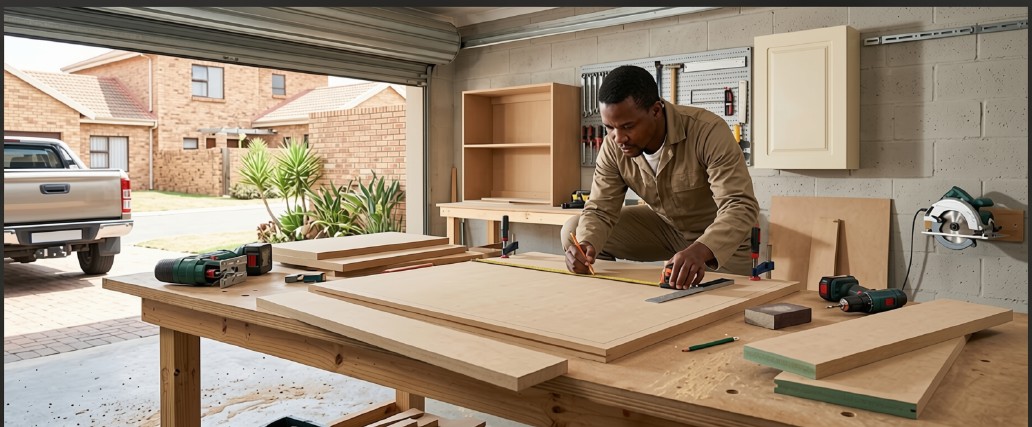
Walk through any modern home and chances are you’ll find MDF somewhere. Behind painted kitchen doors. In built-in cupboards. As shelving, wall panelling, skirtings, or furniture. It’s one of the hardest-working board materials around, yet it’s also one of the most misunderstood.
That’s usually because people know the name without really knowing the material. What is MDF board? When should you choose it over plywood or chipboard? And what can it actually handle?
The answer comes down to understanding what MDF is designed to do. This guide breaks down what MDF board is, the different types available, where it works best, and how to get a cleaner, more professional result whether you’re tackling a weekend DIY project or fitting out an entire space.
If you’re comparing materials before you start, explore Timbercity’s range of boards to see how different products suit different applications and project types.
What is MDF Board? Understanding the Basics
MDF stands for Medium-Density Fibreboard. It’s an engineered wood product made by compressing fine wood fibres with resin and wax under high heat and pressure, creating a dense, smooth, consistent board.
Unlike solid timber, MDF has no grain, knots, or natural imperfections. Every section machines the same way, which makes it exceptionally easy to cut, shape, paint, and finish. That’s one of the biggest reasons it’s become a favourite for cabinetry, furniture, and decorative joinery.
Its smooth surface also delivers an excellent painted finish. There’s no grain to fill, which means crisp edges, cleaner profiles, and a more refined final result.
Like every material, though, MDF has its trade-offs.
It’s heavier than many people expect, which can make handling full sheets difficult without help. Because it’s so dense, it also wears cutting blades faster than natural timber. And while standard MDF performs well indoors, it isn’t designed for prolonged exposure to water. Unsealed edges can absorb moisture and swell if they’re left unprotected.
That’s why preparation matters. Having boards professionally cut before you take them home makes projects easier to manage, particularly with larger sheets. Timbercity’s in-store cutting services help take the heavy lifting, precision cutting, and handling out of the equation.
Exploring the Different Types of MDF Board
Not every MDF board is built for the same job. Choosing the right type from the start saves time and extends the life of the finished project.
- Standard MDF is the everyday workhorse. Its smooth surface makes it ideal for painted furniture, shelving, cabinetry, decorative mouldings, and interior wall features where moisture isn’t a concern.
- Moisture-Resistant (MR) MDF, often recognised by its green core, contains water-resistant resins that help reduce moisture absorption. It’s a better option for bathroom vanities, kitchen sink units, laundries, and other high-humidity areas. While it’s more resistant than standard MDF, it still benefits from properly sealed edges and quality finishes.
- Fire-Retardant (FR) MDF is typically specified for commercial projects where building regulations require improved fire performance. Usually identified by a red or pink core, it’s commonly used in shopfitting, offices, schools, and public buildings.
Selecting the right board isn’t just about the finish you want. It’s about matching the material to the environment it’ll work in.
What Are MDF Boards Used For? Practical Applications
One of MDF’s biggest strengths is its versatility. Because it’s stable, smooth, and easy to machine, it works across a huge range of interior projects.
Cabinetry is one of its most common applications. MDF provides an excellent substrate for painted finishes, melamine, veneers, and PVC wraps, making it a popular choice for modern kitchens, wardrobes, bathroom vanities, and built-in storage.
If you’re building cabinetry, shelving, or furniture, Timbercity’s SupaWood MDF boards are designed to provide the smooth, consistent surface that makes painted and decorative finishes look their best.
It’s equally at home in decorative work. Shaker-style wall panelling, skirting boards, cornices, architraves, feature walls, and custom trim all benefit from MDF’s ability to deliver crisp, clean profiles without worrying about grain direction or imperfections.
Furniture manufacturers also rely on MDF for flat-pack furniture, shelving systems, retail displays, and even speaker boxes, where its dense, consistent structure offers excellent stability.
Expert Tips: How to Use MDF Board in Your Projects
Working with MDF isn’t difficult, but a few small adjustments can make a significant difference to the finished result.
Start with sharp carbide-tipped blades. MDF’s dense fibre structure cuts cleanly with the right tooling but quickly dulls ordinary blades. Clean cuts also reduce the amount of finishing required later.
Dust control is equally important. Cutting MDF creates an extremely fine dust, so always wear an appropriate dust mask and work in a well-ventilated area or use dust extraction where possible.
When fastening MDF, pre-drilling is essential. Driving screws directly into the board, particularly near the edges, can cause splitting or mushrooming. Pilot holes combined with coarse-thread or dedicated MDF screws create a much stronger connection.
The edges deserve extra attention too.
Unlike the smooth faces, cut MDF edges are highly absorbent. If you’re painting the board, sand the edges lightly before applying an MDF sealer or suitable oil-based primer. Taking this extra step prevents uneven paint absorption and gives the entire project a smoother, more durable finish.
Planning also plays a bigger role than many DIYers realise. Accurate measurements, sensible board layouts, and selecting the correct thickness all contribute to a stronger, better-looking result. Before buying your materials, read Timbercity’s guide to choosing the right board thickness for your project.
Choose the Right Board Before You Build
Good projects rarely come down to luck. They come down to choosing the right material before the first cut is made.
MDF continues to be one of the most practical board products available because it delivers consistency, versatility, and a finish that’s difficult to match with many other materials. Whether you’re building cabinetry, creating decorative wall panelling, or fitting out a custom workspace, selecting the right type of MDF gives your project a stronger foundation from the start.
Visit your nearest Timbercity to explore the full range of boards, speak to the team about the best MDF for your application, and get expert advice before you build.
Frequently Asked Questions
- What is MDF board made of compared to regular plywood or chipboard?
MDF is manufactured from fine wood fibres bonded with resin and wax under heat and pressure. Plywood uses layers of timber veneer, while chipboard is made from larger wood particles. - What are the best types of MDF board for damp bathroom environments?
Moisture-Resistant MDF is specifically designed for humid environments such as bathrooms and kitchens, although sealing exposed edges remains important. - How do you seal the porous edges of an MDF board before painting?
Lightly sand the edges, then apply a dedicated MDF sealer or oil-based primer before painting to prevent excessive paint absorption. - What are MDF boards used for in modern kitchen cabinetry?
MDF is widely used for painted cabinet doors, wrapped doors, shelving, decorative panels, and built-in storage because of its smooth, consistent surface. - Exactly how do you use MDF board without it splitting when inserting screws?
Pre-drill pilot holes before inserting screws and use coarse-thread or specialised MDF screws to create a stronger, cleaner fixing.